Stranded Vehicles Recovered Without Further Damage
Winch Out in Lyons for vehicles stuck in mud, snow, ditches, or uneven terrain throughout the region
When your vehicle leaves the roadway and becomes immobilized in mud, snow, sand, or a ditch, attempting to drive out often worsens the situation by digging deeper ruts or damaging drivetrain components. Recovery equipment designed specifically for winching operations allows controlled extraction that pulls the vehicle back to solid ground without adding stress to the frame, suspension, or body panels. Santiam Towing and Recovery provides winch out services across Lyons using specialized equipment that applies steady, controlled force from calculated angles to free stuck vehicles safely.
The service becomes necessary after off-road excursions end in soft terrain, when winter storms leave vehicles stranded in snowbanks, or when drivers misjudge road edges and slide into ditches. Recovery involves assessing the vehicle's position, identifying solid anchor points for the recovery vehicle, and selecting cable attachment points on the stuck vehicle that distribute pulling force without bending or tearing sheet metal.
Arrange an on-site winch out evaluation to address your current vehicle recovery situation.
What Recovery Equipment Actually Accomplishes
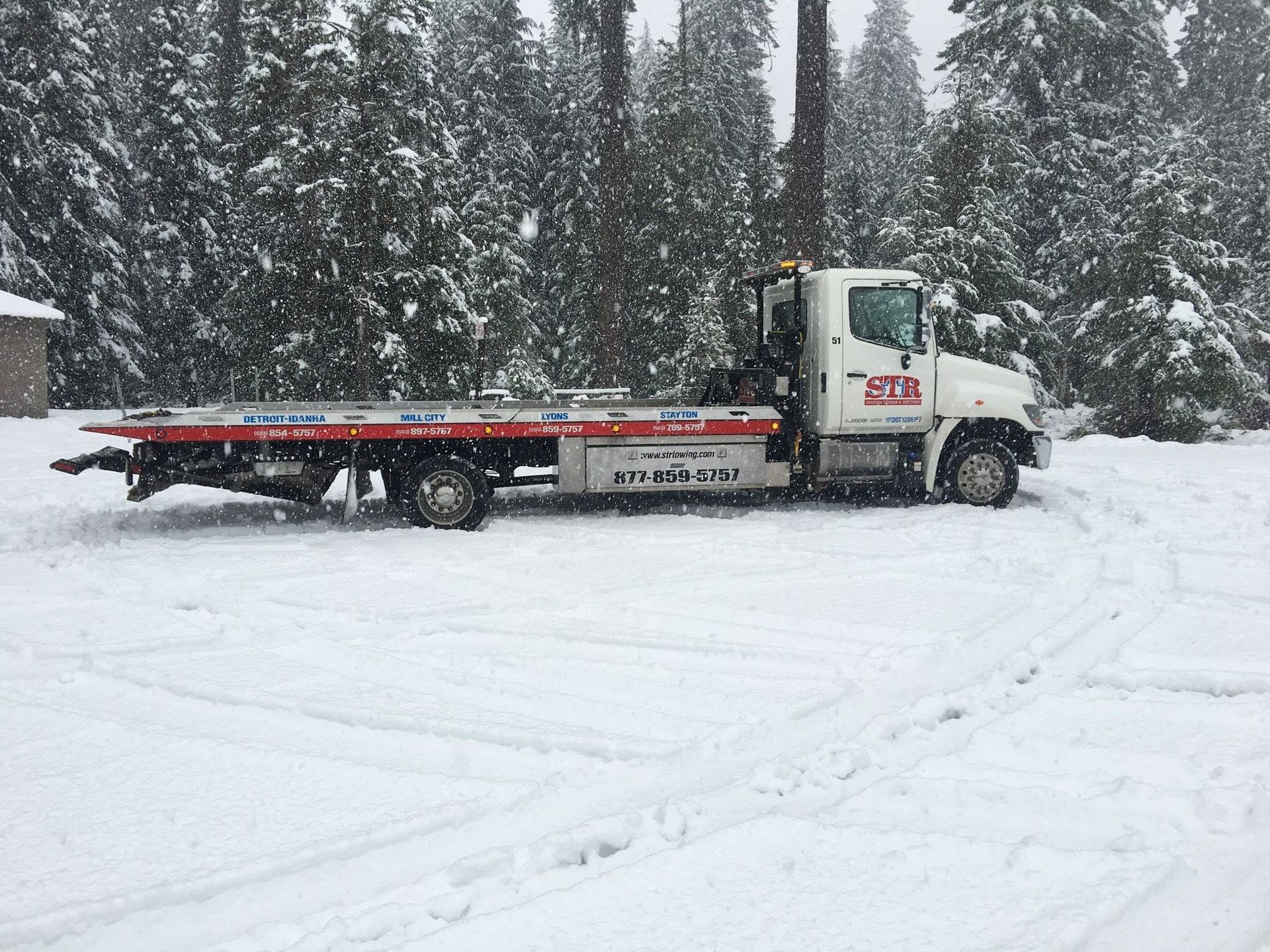
Winch recovery begins with positioning the tow truck on stable ground at an angle that allows straight-line pulling whenever possible, since angled pulls create side loads that can damage vehicle frames. Operators attach the winch cable to designated recovery points—typically frame-mounted hooks or tow eyes—and apply tension gradually while monitoring the stuck vehicle's movement. If the vehicle doesn't move immediately, operators may deflate tires slightly to increase traction, place boards or traction mats under drive wheels, or adjust the pulling angle rather than simply applying more force.
After extraction, your vehicle sits on solid ground with its drivetrain intact, body panels undamaged by improper pulling methods, and suspension components free from the stress that occurs when recovery attempts use attachment points not designed for pulling forces. You'll notice the undercarriage shows no new damage beyond the mud or debris accumulated while stuck, and the vehicle remains mechanically sound enough to drive home or to a repair facility if the initial incident caused other problems.
The service includes clearing debris from around stuck wheels when it aids extraction, checking for fluid leaks or visible damage after recovery, and confirming the vehicle's steering and drivetrain function normally before the operator leaves the scene. Winter conditions in the Lyons area often create situations where vehicles slide off icy roads into drainage ditches, requiring recovery equipment that can operate in snow and limited visibility while managing the added complication of frozen ground that affects anchor point selection.
Answers to Recovery Service Questions
Vehicle owners facing stuck situations often need clarity about recovery methods, timing, and what happens during the extraction process.
What makes winch recovery safer than tow strap pulling?
Winches apply controlled, steady force through a cable spooled around a drum, allowing operators to stop and adjust tension as needed, while tow straps create sudden shock loads when a vehicle accelerates to yank another vehicle free, often breaking attachment points or causing frame damage.
How quickly can recovery service reach rural areas around Lyons?
Response time depends on the operator's current location, road conditions between the shop and your stuck vehicle, and whether the situation requires additional equipment beyond a standard recovery truck, with typical responses ranging from thirty minutes to over an hour during severe weather events.
When does a stuck vehicle require more than basic winching?
If your vehicle sits in a deep ravine, has rolled onto its side, or is partially submerged in water, the recovery becomes a heavy extraction requiring rigging equipment, multiple anchor points, and possibly additional recovery vehicles to stabilize and lift while pulling.
What should you do while waiting for winch out service?
Stay with your vehicle if it's safely off the roadway and you can remain warm, turn on hazard lights, and avoid repeated attempts to drive out since spinning tires in mud or snow digs the vehicle deeper and makes recovery more difficult.
How does vehicle size affect recovery difficulty?
Larger trucks and RVs require heavier winching equipment and more careful anchor point selection due to their weight, while passenger cars stuck in sand or mud often extract easily unless they've been driven so deep that the undercarriage sits on the ground.
Santiam Towing and Recovery responds to winch out calls throughout the region with equipment designed for various terrain challenges and vehicle types. Call for immediate assistance when your vehicle becomes stranded and provide your location and a description of the situation.