
Handling Electric Powertrains During Transport
Electric Vehicle Towing in Lyons for disabled EVs, roadside failures, and accident recovery requiring manufacturer-compliant transport procedures
Electric vehicles disabled by battery depletion, charging system failures, or collision damage require transport methods that differ from conventional vehicles to protect high-voltage components and drivetrain assemblies. Santiam Towing and Recovery uses equipment designed to handle electric vehicle architecture safely, following manufacturer towing recommendations that prevent damage to electric motors, battery systems, and regenerative braking components. Operators trained in EV handling procedures dispatch in Lyons to assist with breakdowns, accidents, and service transport.
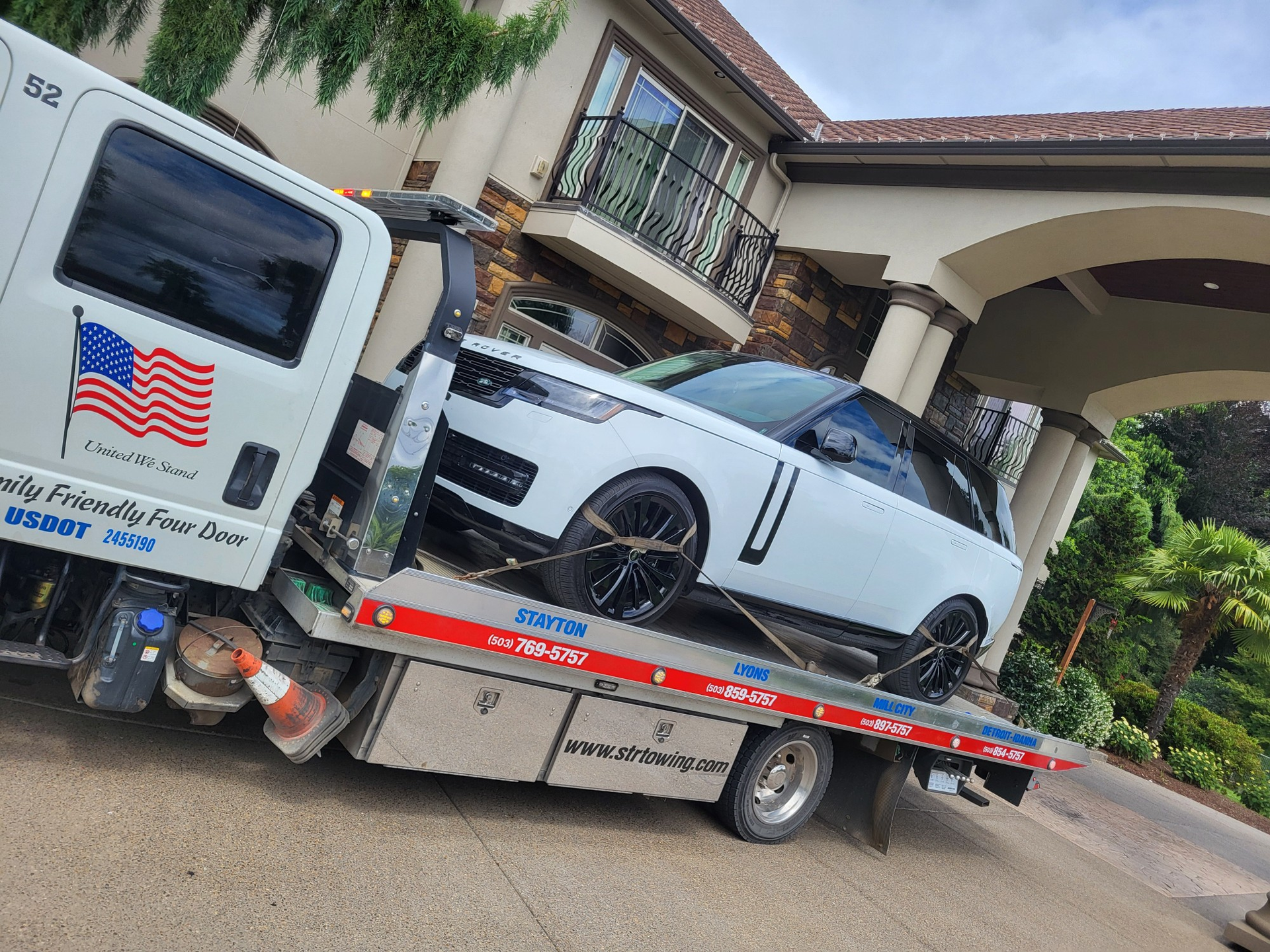
Electric vehicle towing addresses the specific risk that improper transport methods pose to electric drivetrains. Many EVs cannot be towed with drive wheels on the ground because the electric motor remains mechanically connected to the wheels even when the vehicle is off. Rotating the wheels while towing generates current back through the motor, potentially damaging the inverter, battery management system, or motor windings. Flatbed transport or dolly systems that lift all drive wheels prevent this forced rotation and protect the electric powertrain during transport.
Request electric vehicle transport assistance to arrange compliant handling for your disabled EV.
How EV Transport Differs From Conventional Towing
Electric vehicle transport begins with identifying the vehicle's drive configuration and consulting manufacturer towing guidelines to determine the approved method. Front-wheel-drive EVs require front-wheel lifting, all-wheel-drive models typically require flatbed transport, and rear-wheel-drive variants need rear-wheel elevation or full flatbed loading. Operators verify the drive configuration before attaching equipment to avoid using a method that forces drivetrain rotation during transport.
Once loaded correctly, the electric vehicle reaches the destination without drivetrain stress or electrical system damage. Owners notice that battery charge levels remain stable during transport and no warning lights appear related to motor or inverter faults. Proper handling prevents repair costs that result from incorrect towing methods, which can damage components worth thousands of dollars if the electric motor operates in reverse or the battery system experiences unintended charge cycling.
The service does not include emergency battery charging or mobile diagnostic services. Transport focuses solely on moving the disabled vehicle to a service facility, charging location, or owner-specified destination using methods that comply with manufacturer towing specifications. Operators carry reference materials for common EV models but may need to verify towing procedures for newer or less common electric vehicles before proceeding with the lift.
Common Questions About Transporting Electric Vehicles
Electric vehicle owners in Lyons rely on specialized transport when battery depletion, charging failures, or mechanical issues leave their vehicles stranded without conventional engine starting alternatives.
What happens if an electric vehicle is towed with drive wheels on the ground?
Towing an EV with drive wheels in contact with the pavement forces the electric motor to rotate, which generates current back through the inverter and into the battery system. This unintended power generation can damage the inverter, trigger battery management faults, or overheat motor windings not designed to operate in reverse during towing.
How do operators know which towing method a specific EV model requires?
Operators consult manufacturer towing guidelines published in owner's manuals and service documentation that specify approved transport methods for each model. These guidelines indicate whether flatbed transport, wheel-lift with dollies, or specific wheel configurations are required based on the vehicle's drive layout and electric motor placement.
Can electric vehicles be towed the same distance as conventional vehicles?
Yes, transport distance does not differ for electric vehicles once the correct method is applied. The concern is not distance but rather the transport method itself, since any amount of forced drivetrain rotation can cause damage regardless of how far the vehicle travels.
What should EV owners communicate when requesting towing service in Lyons?
Owners should specify that the vehicle is electric and identify the make, model, and drive configuration if known. This information allows operators to prepare the correct equipment and review manufacturer towing procedures before arriving, which reduces on-site delays and ensures compliant handling from the start.
Does electric vehicle towing cost more than conventional towing?
Pricing depends on distance, equipment requirements, and service type rather than vehicle powertrain alone. Flatbed transport typically costs more than wheel-lift towing due to equipment differences, so EVs requiring flatbed handling may incur higher charges than conventional vehicles that can be safely transported using wheel-lift methods.
Santiam Towing and Recovery maintains equipment and training to transport electric vehicles according to manufacturer specifications, protecting high-voltage systems during roadside recovery and service transport. Call us when your electric vehicle requires compliant towing to avoid drivetrain damage during transport.