Commercial Vehicles Back on Schedule Fast
Heavy-Duty Towing in Lyons for semi trucks, buses, and commercial equipment breakdowns
When a semi truck breaks down on a major highway or a bus loses power on a rural route, every minute of downtime affects schedules, contracts, and revenue. Santiam Towing and Recovery operates specialized heavy-duty wreckers staffed by trained operators who manage the unique challenges of recovering commercial vehicles across Lyons, Oregon and surrounding highway corridors. These situations demand equipment rated for extreme weights, operators who understand load distribution, and recovery techniques that prevent secondary damage to expensive commercial assets.
Heavy-duty towing involves far more than hooking a chain to a frame. Operators assess vehicle positioning, road conditions, and cargo status before selecting rigging points and deploying hydraulic systems designed to lift and stabilize vehicles weighing tens of thousands of pounds. For commercial customers, the service also includes decking and undecking capabilities, which allow disabled vehicles to be loaded onto flatbed trailers when standard towing methods are impractical, and load shift services that redistribute or secure cargo that has shifted during transit or an accident.
Request immediate heavy-duty towing assistance to minimize downtime and coordinate recovery logistics specific to your vehicle and cargo.
How Heavy-Duty Recovery Handles Complex Situations
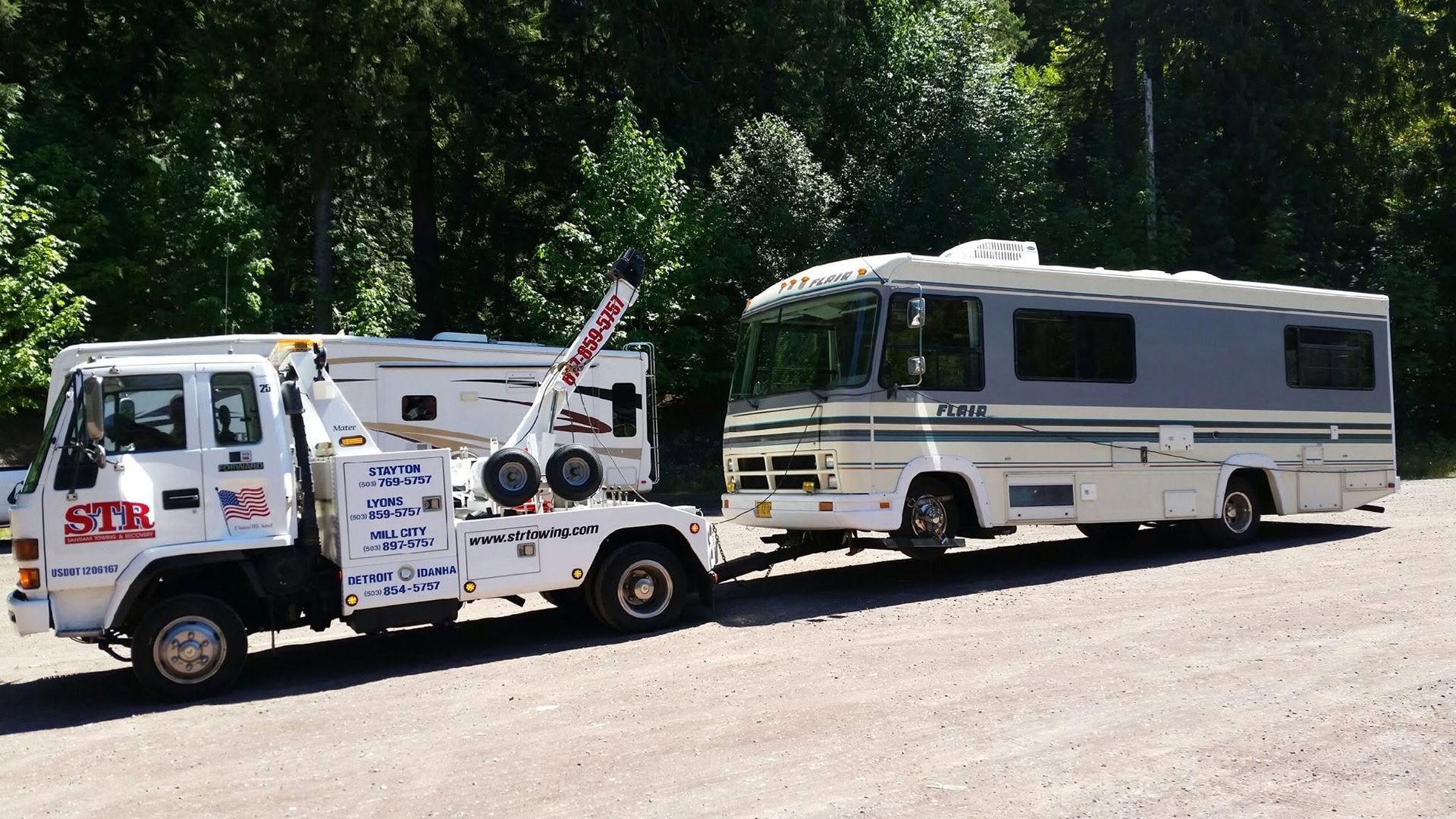
Recovery operators use winches, underlift systems, and adjustable boom angles to manage vehicles positioned in ditches, on embankments, or jackknifed across lanes. Each recovery plan accounts for the vehicle's weight distribution, axle configuration, and any cargo still onboard, ensuring that lifting forces are applied correctly to prevent frame damage or additional mechanical failures.
Once your vehicle is secured and transported, you'll notice that frame rails remain intact, suspension components are undamaged, and cargo arrives in the same condition it was in before the breakdown. The difference between proper heavy-duty towing and improper handling often shows up weeks later, when a truck that was dragged instead of lifted begins experiencing alignment issues, cracked welds, or hydraulic failures caused by uncontrolled stress during recovery.
Santiam Towing and Recovery coordinates with repair facilities, fleet managers, and insurance adjusters to streamline the recovery process. Decking services allow vehicles with locked brakes, missing wheels, or severe front-end damage to be transported without further mechanical compromise, while load shift assistance ensures that freight remains stable and compliant with weight regulations during transport.
What Commercial Operators Ask Before Recovery
Heavy-duty recovery presents unique concerns for fleet managers, owner-operators, and logistics coordinators who depend on predictable timelines and undamaged equipment.
What equipment is used for recovering a fully loaded semi truck?
Specialized heavy-duty wreckers rated for the combined weight of the vehicle and cargo use hydraulic underlift systems, rotating booms, and multi-point rigging to distribute lifting forces evenly across the frame, preventing localized stress that could crack welds or bend rails.
How does decking differ from standard towing?
Decking involves loading the disabled vehicle onto a flatbed trailer using ramps, winches, or hydraulic tilt beds, which is necessary when the vehicle cannot roll due to axle damage, seized brakes, or missing wheels, whereas standard towing lifts one axle and tows the vehicle on its remaining wheels.
When is load shift service required?
Load shift service is necessary when cargo has moved during an accident or emergency braking event, creating weight imbalances that make the vehicle unsafe to tow or exceed legal axle weight limits until the freight is redistributed or partially offloaded.
What happens if recovery is needed on a steep grade or off-road?
Operators in Lyons frequently manage recoveries on mountain passes and logging roads where standard wreckers cannot operate safely, using winch-assist techniques and tandem recoveries that anchor the wrecker to stable positions while controlling descent or extraction angles.
How quickly can heavy-duty service respond to highway breakdowns?
Response time depends on current dispatch location and highway conditions, but operators prioritize commercial recoveries that block traffic lanes or create hazards, coordinating with law enforcement to manage scene safety while rigging and recovery proceed.
Santiam Towing and Recovery handles the technical and logistical demands of heavy-duty recovery with equipment designed for the worst-case scenarios commercial operators face on Oregon highways. Call for immediate dispatch when your commercial vehicle is disabled and downtime is costing you more than just time.